


Satellite internet has evolved dramatically over recent years, shedding its reputation as a slow, high-latency last resort. The driving force behind this worldwide transformation is Starlink, the high-speed broadband network engineered by Elon Musk's SpaceX, utilizing a mega-constellation of thousands of Low Earth Orbit (LEO) satellites to deliver high-throughput, low-latency broadband nearly anywhere on the planet.
In Brazil, Starlink has become a game-changer for rural residents, agricultural farms, remote Amazon communities, boaters, RV/camper travelers, and distributed businesses operating outside fiber or 4G/5G coverage.
Direct Capsule (Overview): In 2026, Starlink in Brazil offers residential subscription plans starting at R$ 189/month, typical download speeds between 100 Mbps and over 400 Mbps, and latency averages between 25 ms and 50 ms. The hardware lineup includes the ultracompact Starlink Mini (with integrated Wi-Fi for outdoor mobility), the versatile Starlink Standard for fixed rural homes, and Performance/Enterprise terminals for mission-critical operations. Direct-to-cell phone connectivity is on the horizon, but regular commercial broadband still requires a dedicated satellite terminal.
1. What is Starlink and How Does It Work?
The fundamental architectural difference between Starlink and legacy satellite providers (such as HughesNet or Viasat) is orbital altitude:
- Legacy Geostationary Satellites: Positioned at roughly 35,786 km above the Earth. At this vast distance, signal travel time creates round-trip latency (ping) exceeding 600 ms to 1,000 ms, rendering video calls sluggish and online gaming impossible.
- Starlink LEO Satellites: Orbit at only 550 km above Earth's surface (over 60 times closer). This proximity slashes signal transit time, yielding latencies comparable to ground-based broadband (typically 25 ms to 50 ms).
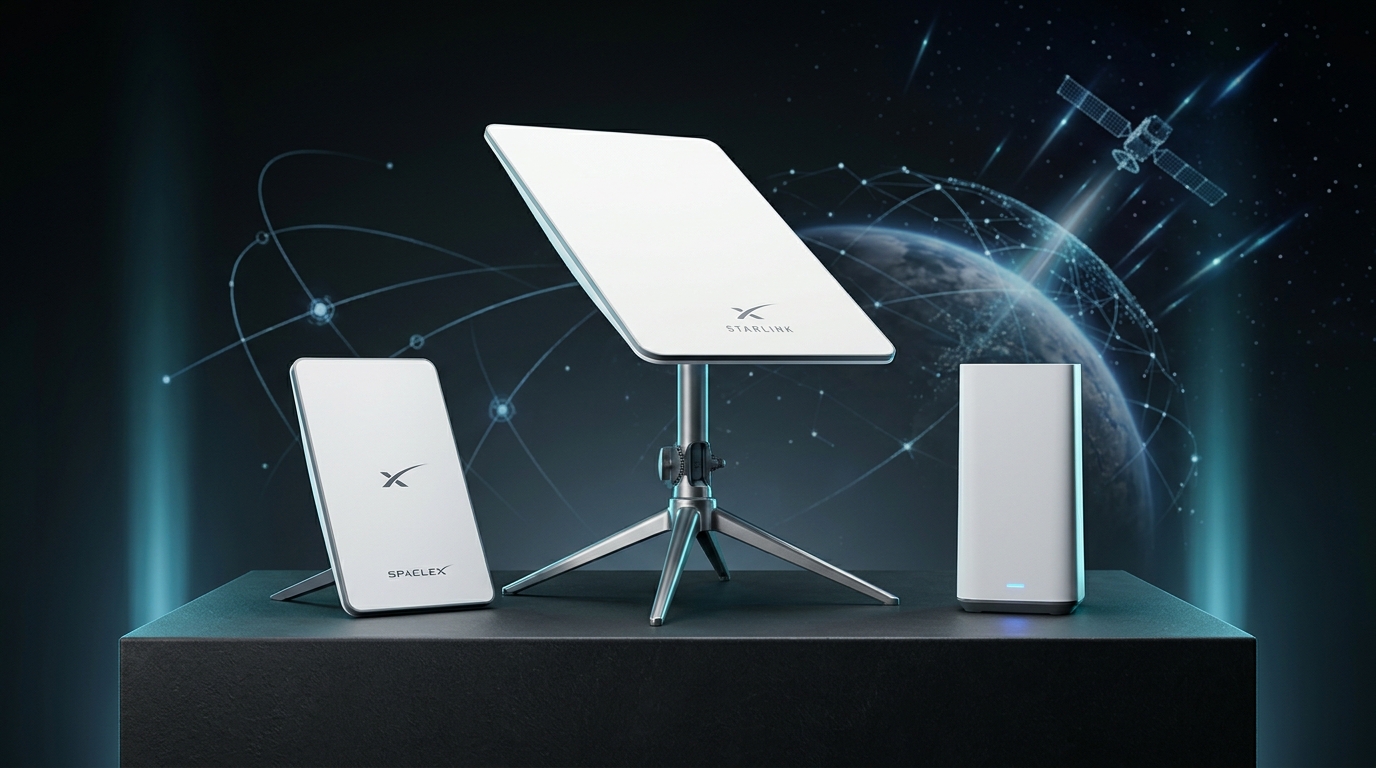
2. Starlink Dish Models in 2026
- Starlink Mini: Weighing approximately 1.1 kg, fits inside a backpack, features built-in Wi-Fi 5/6, and consumes only 25W–40W DC power.
- Starlink Standard: Modern phased-array kickstand terminal bundled with the Starlink Router 3 (Wi-Fi 6) and native dual Ethernet ports.
- Starlink Performance & Enterprise: High-gain, weather-hardened terminals designed for intense maritime, agricultural, and industrial environments.
3. Pricing & Plans in Brazil
- Residential 100 Mbps: From R$ 189/month with unlimited data.
- Residential Max: From R$ 249/month with speeds up to 400+ Mbps.
- Roam 100 GB: From R$ 339/month for mobile campers and travelers.
- Roam Unlimited: From R$ 619/month with pauseable billing.
4. Does Starlink Offer Free Internet in Brazil?
No. Commercial residential broadband requires an active hardware kit and monthly subscription. The upcoming Direct to Cell satellite-to-phone system is designed for emergency messaging and partner carrier roaming, subject to Anatel regulatory approval.
Frequently Asked Questions
Does Starlink cover all of Brazil?
Yes, satellite orbital paths cover 100% of Brazilian national territory.
Does the Starlink Mini include a Wi-Fi router?
Yes, the Wi-Fi router is fully integrated into the back of the Mini antenna housing.
Can Starlink run on solar power?
Yes. The Mini draws 25W–40W, easily powered by portable lithium power stations or a 100W solar kit.